
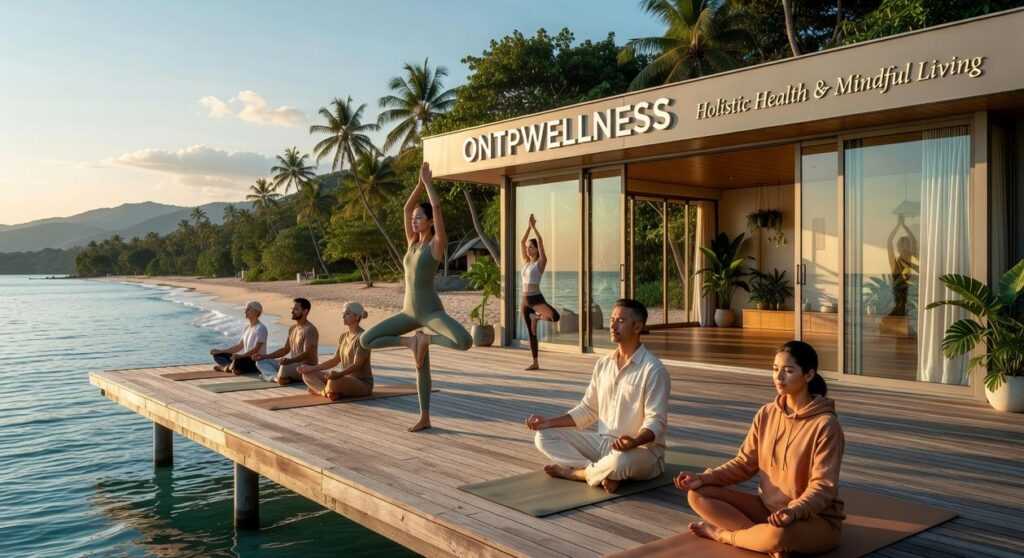
I’ve spent years sifting through wellness advice online and most of it contradicts itself.
You’re probably tired of jumping between five different apps for fitness, three websites for nutrition, and countless blogs for mental health tips. It’s exhausting trying to piece together a complete picture of your health.
Here’s the reality: finding one trustworthy source that covers everything is harder than it should be.
I analyzed what makes the best wellness platforms actually work. Not the ones with the flashiest marketing. The ones people stick with and see real results from.
This guide breaks down what you should look for in an online wellness platform. I’ll show you which features matter and which ones are just nice to have.
At ontpwellness, we’ve studied how people actually use these platforms. We know what works because we’ve seen what keeps people engaged with their health long term.
You’ll learn the core components that separate genuine wellness resources from the noise. What to prioritize for fitness, nutrition, and mental health support.
No fluff about revolutionary approaches. Just a clear checklist for finding a platform that fits your life.
The Foundation: Integrated Fitness Routines and Nutrition Plans
You know what doesn’t work?
Opening an app and staring at 500 random workout videos with no idea where to start.
I see this all the time. People download a fitness platform thinking they’ll finally get in shape. Then they spend 20 minutes scrolling through generic routines that don’t match their goals or fitness level.
They give up before they even begin.
Here’s what actually matters when you’re looking at a wellness platform.
Beyond the Basic Workout Library
You need variety that makes sense for your life.
A good platform gives you strength training when you want to build muscle. Yoga when you need to stretch out tight hips. HIIT sessions for those days when you only have 15 minutes. Low-impact cardio that won’t wreck your knees.
But here’s the key part. You should be able to filter all of this by how much time you have, how hard you want to work, and what equipment is sitting in your garage (or your living room).
Because a workout you can’t actually do is worthless.
What Personalization Really Means
Some people say personalized fitness is just marketing speak. They claim you can get the same results following any decent program.
And sure, any movement is better than no movement. I won’t argue with that.
But when you’re trying to lose 30 pounds, you don’t need the same programming as someone training for a marathon. Your body responds differently. Your recovery needs are different. Even your motivation triggers aren’t the same.
A platform worth your time builds workout plans around what you’re trying to accomplish. Weight loss looks different from muscle gain. Improving mobility requires a different approach than training for strength.
The benefit? You stop wasting time on exercises that don’t move you toward your actual goal. Research from the American College of Sports Medicine shows that goal-specific programming produces better adherence and results than generic routines.
You also need to track what’s working. When you can see your progress over weeks and months, you stay motivated. You can spot when something isn’t clicking and adjust before you waste another month.
The Nutrition Side Nobody Talks About
Here’s where most platforms fall apart.
They’ll give you a recipe database and call it nutrition support. Maybe throw in a calorie counter if you’re lucky.
That’s not enough.
What you actually need is science-backed guidance from people who understand how food affects your body. Registered dietitians who can explain why protein timing matters for muscle recovery. Meal plans that account for your schedule and food preferences.
Not just another smoothie recipe.
When ontpwellness platforms get this right, you learn how to eat in a way that supports your training. You understand which foods help you recover faster. You figure out why you’re always hungry at 3pm and what to do about it.
The benefit is simple. You stop guessing and start eating with purpose.
When Everything Works Together
This is where it gets interesting.
A platform that connects your workouts with your nutrition gives you something most people never get. A complete picture of what’s actually happening with your health.
You can see that your energy crashed on Tuesday because you skipped breakfast before that morning run. Or that you’re not recovering well because you’re not eating enough protein after strength sessions.
These patterns are invisible when fitness and nutrition live in separate apps. But when they’re integrated, you spot problems fast and fix them before they derail your progress.
That’s the real benefit. You’re not just working out or eating better. You’re building a system that actually works for your life.
A Pillar of Health: Comprehensive Mental Wellness Resources
Mental wellness isn’t just about sitting cross-legged and breathing deeply for ten minutes.
Don’t get me wrong. Meditation matters. But if that’s all you’re doing, you’re missing the bigger picture.
Some people argue that meditation alone can solve most mental health challenges. They’ll tell you that if you just meditate consistently, everything else falls into place. And sure, there’s research showing meditation reduces stress and improves focus (Goyal et al., 2014).
But here’s where that thinking falls short.
Your mental health needs more than one tool. It needs a full system.
That’s why I built Ontpwellness around multiple approaches. Because real mental wellness requires different strategies for different moments.
Going Beyond the Basics
Yes, guided meditations help with stress. But what about when anxiety hits at 2 AM? Or when you can’t figure out why you feel off for three days straight?
That’s where breathwork comes in. Where mindfulness techniques give you something concrete to grab onto. Where understanding your patterns makes the difference between reacting and responding. By incorporating breathwork and mindfulness techniques into your gaming routine, you can transform your experience from one of mindless reaction to thoughtful response, making your gaming Homepage a hub of clarity and intentionality. By visiting the of mindfulness resources, you can discover valuable breathwork techniques that enhance your gaming experience by fostering a deeper connection to your emotional responses.
The platforms worth your time offer more than recordings. They give you actual frameworks you can use.
Learning From People Who Know
I work with licensed mental health professionals who create content you can actually apply. Not theory. Not abstract concepts.
We’re talking about cognitive behavioral skills you can use today. Video sessions on building resilience when life gets hard. Articles on emotional intelligence that don’t read like a textbook.
Because knowing something exists and knowing how to use it are two different things.
Making It Practical
Here’s what I’ve learned after years of this work. You need daily practices that fit into your actual life.
Guided journaling prompts that take five minutes. Mood tracking that shows you patterns you’d never notice otherwise (and trust me, those patterns matter). Gratitude exercises that don’t feel forced or fake.
These aren’t extras. They’re how you stay connected to your mental health when things get busy.
Finding Your People
Look, I need to be clear about something. Community forums aren’t therapy. They never will be.
But connection? That matters too.
Sometimes you just need to know someone else gets it. That you’re not the only one struggling with Sunday anxiety or feeling overwhelmed by simple decisions.
Moderated spaces where people share real experiences can give you perspective. They remind you that working on your mental health isn’t something you do alone.
The Holistic Approach: Connecting Mind, Body, and Lifestyle
You can’t out-train bad sleep.
I see people grinding through workouts on four hours of rest, wondering why they’re not making progress. They think more effort equals better results.
It doesn’t work that way.
Your body needs recovery. Not just rest days from the gym, but actual quality sleep where your muscles repair and your brain processes everything you learned that day.
Here’s what I recommend.
Start with your sleep hygiene. Set a consistent bedtime. Keep your room cool and dark. Put your phone in another room (yes, really). These aren’t sexy tips, but they work. Research from the National Sleep Foundation shows that consistent sleep schedules improve both sleep quality and daytime performance.
Wind-down routines matter too. I tell people to pick three calming activities they can do in the same order every night. Maybe it’s stretching, reading, and deep breathing. Your brain learns the pattern.
But here’s where most wellness advice falls short.
They tell you to sleep better and exercise more, then act like that’s enough. Like your life exists in a vacuum where you have unlimited time and zero stress.
You need systems that fit your actual life. The ontpwellness health guide from ontpress approach works because it connects the dots between what you do in structured workout time and the other 23 hours of your day.
Track one habit at a time. Not five. Pick something small like drinking water when you wake up or taking a five-minute walk after lunch. Build that for two weeks before adding anything else.
For stress management at work, I recommend the 90-minute rule. Work in focused blocks, then take a real break. Stand up. Move around. Look at something farther than your screen.
On busy days when you can’t hit the gym? Do something. Ten minutes of bodyweight exercises beats zero minutes of perfect programming.
The goal isn’t perfection. It’s building a life where healthy choices become your default, not something you have to force.
Credibility and Usability: What Separates the Best from the Rest
You’ll hear people say that fancy credentials don’t matter. That real-world experience beats a piece of paper on the wall.
I used to think that too.
But here’s what changed my mind. I’ve seen too many wellness platforms dish out advice that sounds good but falls apart under scrutiny. The kind of stuff that could actually hurt you if you follow it.
Vetted expert insights matter. When I look at a platform, I want to know who’s behind the content. Are they certified personal trainers? Registered dietitians? Licensed therapists?
Some folks argue this is gatekeeping. They say lived experience is just as valid as formal training. And look, there’s truth there. Someone who’s lost 100 pounds knows things no textbook can teach.
But here’s the problem with that thinking.
Experience without knowledge can be dangerous. What worked for one person’s body might wreck yours. A registered dietitian understands why something works and can spot when it won’t.
At ontpwellness, I make sure every piece of content gets reviewed by credentialed professionals. Not because I love paperwork. Because I’ve seen what happens when people follow bad advice.
The interface matters too. You shouldn’t need a map to find a workout routine.
Some platforms pack in every feature imaginable. They think more options equals more value. But a cluttered interface just makes you quit before you start. In a world where some platforms overwhelm users with excessive features, the simplicity and clarity of the Ontpwellness Health Guide From Ontpress stands out as a refreshing alternative that encourages engagement rather than frustration. …stands out as a refreshing alternative, providing users with essential insights without the distraction of unnecessary features, making the Ontpwellness Health Guide From Ontpress an invaluable resource for anyone seeking straightforward wellness advice.
Here’s what I look for:
- Can you find what you need in under 30 seconds?
- Does the navigation make sense without instructions?
- Can you get to your workout or meal plan without clicking through five screens?
If the answer to any of those is no, the platform fails. I don’t care how good the content is if you can’t access it.
Invest in Your Well-being with the Right Digital Partner
You now have a framework for evaluating any online platform that claims to improve your health.
I know how overwhelming it gets. You’re bouncing between fitness apps, nutrition blogs, and meditation guides. Nothing connects and you’re left piecing together advice that might not even work together.
The solution is simpler than you think.
You need one integrated platform that handles fitness, nutrition, and mental health as a complete system. Not separate pieces you have to figure out yourself.
That’s what actually works.
Here’s what you should do: Use this guide as your checklist. Find a digital wellness partner that gives you expert guidance and the tools you need in one place. Look for platforms that treat your health as connected, not compartmentalized.
ontpwellness was built to solve this exact problem. We bring together everything you need to build a healthier and more balanced life.
Stop jumping between disconnected resources. Your well-being deserves better than that. Advice Guide Ontpwellness. Advice Tips Ontpwellness.
 Vorric Orrendale is the kind of writer who genuinely cannot publish something without checking it twice. Maybe three times. They came to holistic health approaches through years of hands-on work rather than theory, which means the things they writes about — Holistic Health Approaches, Wellness Tips and Strategies, Nutrition and Healthy Eating, among other areas — are things they has actually tested, questioned, and revised opinions on more than once.
That shows in the work. Vorric's pieces tend to go a level deeper than most. Not in a way that becomes unreadable, but in a way that makes you realize you'd been missing something important. They has a habit of finding the detail that everybody else glosses over and making it the center of the story — which sounds simple, but takes a rare combination of curiosity and patience to pull off consistently. The writing never feels rushed. It feels like someone who sat with the subject long enough to actually understand it.
Outside of specific topics, what Vorric cares about most is whether the reader walks away with something useful. Not impressed. Not entertained. Useful. That's a harder bar to clear than it sounds, and they clears it more often than not — which is why readers tend to remember Vorric's articles long after they've forgotten the headline.
Vorric Orrendale is the kind of writer who genuinely cannot publish something without checking it twice. Maybe three times. They came to holistic health approaches through years of hands-on work rather than theory, which means the things they writes about — Holistic Health Approaches, Wellness Tips and Strategies, Nutrition and Healthy Eating, among other areas — are things they has actually tested, questioned, and revised opinions on more than once.
That shows in the work. Vorric's pieces tend to go a level deeper than most. Not in a way that becomes unreadable, but in a way that makes you realize you'd been missing something important. They has a habit of finding the detail that everybody else glosses over and making it the center of the story — which sounds simple, but takes a rare combination of curiosity and patience to pull off consistently. The writing never feels rushed. It feels like someone who sat with the subject long enough to actually understand it.
Outside of specific topics, what Vorric cares about most is whether the reader walks away with something useful. Not impressed. Not entertained. Useful. That's a harder bar to clear than it sounds, and they clears it more often than not — which is why readers tend to remember Vorric's articles long after they've forgotten the headline.