
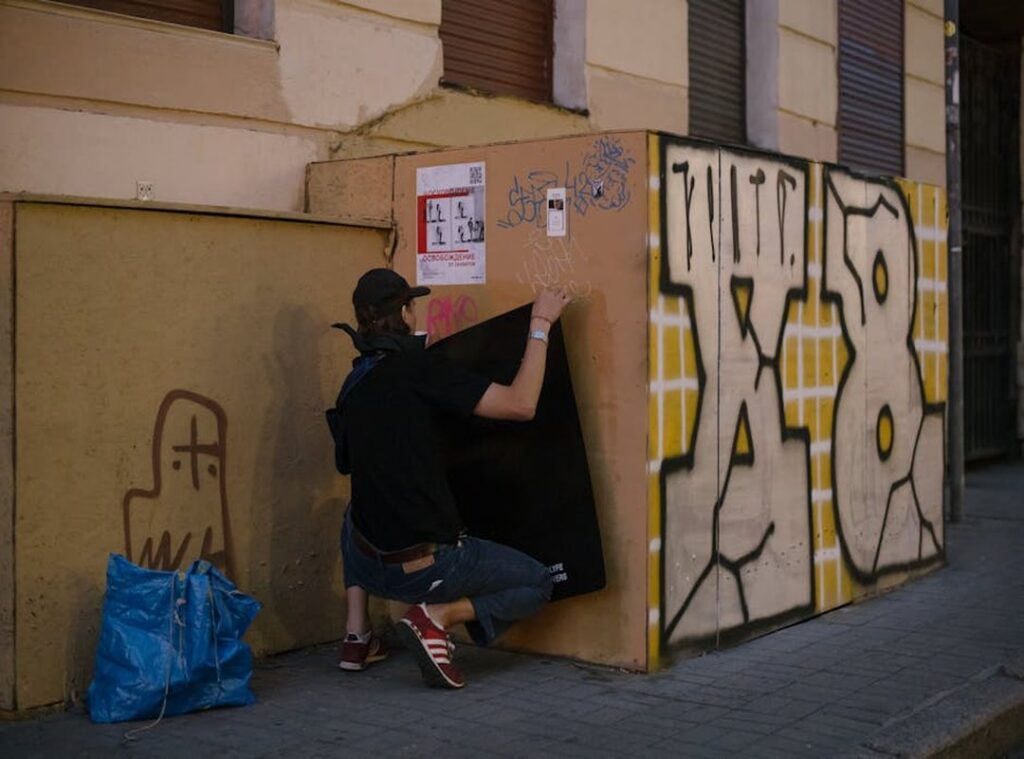
Walking past a dull city wall, you see it transform into a burst of color and creativity. It’s like the wall itself comes alive, and graffiti art has that power.
But let’s be real, it can seem complex and intimidating. You might think, Where do I even start? This guide is here to break it down for you.
We’ll provide a clear, step-by-step tutorial that demystifies the basics of callejero graffitis faciles for absolute beginners.
This isn’t just any guide. It’s built on foundational techniques used by artists for decades, stripped down to the essentials. You’ll learn how to choose the right tools, master basic can control, understand letter structure, and practice safely and legally.
No more confusion, no more barriers, and let’s get started.
Choosing Your Arsenal: A Beginner’s Guide to Spray Cans and Caps
When you’re starting out, it’s tempting to grab the first spray can you see. But not all spray paints are created equal. Hardware store paint, like Rust-Oleum, is cheaper but often has higher pressure and less pigment.
Artist-grade spray paint, such as Montana or Molotow, offers better control and more vibrant colors.
Some people argue that hardware store paint is good enough for beginners. Sure, it’s budget-friendly, but the high pressure and lower pigment quality can make it harder to handle. You might end up with uneven coverage and a lot of frustration.
Trust me, it’s worth investing in artist-grade paint from the start.
Low-pressure cans are your best bet if you’re new to this. They offer more control and are more forgiving when you’re learning line work. This way, you can focus on technique without fighting the can.
Now, let’s talk about caps. Fat caps are great for filling large areas quickly. Skinny caps are perfect for outlines and details.
Specialty caps, like needle caps, give you even more precision.
You might think you need every cap out there. But honestly, starting with a few basics will get you far. A pack of assorted caps will cover most of your needs.
Here’s a beginner’s shopping list:
– A can of black
– A can of white
– A fill color of your choice
– A pack of assorted caps
– A high-quality respirator mask
– Gloves
Safety gear is non-negotiable. A good respirator mask protects you from fumes and particulates. Gloves keep your hands clean and free from paint.
Don’t skimp on these.
Pro tip: Shake the can for at least two minutes before use. This ensures the paint is well mixed. After you’re done, clear the cap by spraying it upside down.
This keeps the nozzle from clogging.
Remember, callejero graffitis faciles start with the right tools and a bit of practice.
Mastering the Can: Essential Spray Paint Control Techniques
Can control is the first fundamental skill you need to master. It’s all about how you hold and move the can.
Distance from the wall affects line thickness and opacity. Closer means sharper and thinner lines, and farther gives you softer and wider lines.
Let’s start with a step-by-step tutorial for practicing basic lines. Grab some cardboard or find a legal wall.
First, draw straight lines. Keep your arm steady and move it in a smooth, consistent motion. Don’t just use your wrist; engage your whole arm.
Next, try curved lines. Start slow and get a feel for how the can responds. Practice making smooth, flowing curves.
Circles are a bit trickier. Start with small circles and gradually increase the size. Consistency is key here.
Now, let’s talk about ‘fading’ or creating gradients. This involves varying the distance and spray angle. Move the can closer for darker, more opaque areas.
Move it farther for lighter, more transparent areas.
A classic technique is the ‘flare’ tag. It’s a quick, sweeping motion that creates a line tapering at the ends. It takes practice, but it’s worth it.
Here’s a practice drill: create a ‘can control board.’ Fill it with different lines, dots, and shapes. This builds muscle memory and helps you get comfortable with the can.
Remember, smooth, consistent arm movements are crucial. Moving just your wrist is a common beginner mistake. Use your whole arm for better control.
| Technique | Description |
|---|---|
| Straight Lines | Move your arm in a smooth, consistent motion. |
| Curved Lines | Start slow and make smooth, flowing curves. |
| Circles | Begin with small circles and gradually increase the size. |
| Fading | Vary the distance and spray angle to create gradients. |
| Flare Tag | Use a quick, sweeping motion for a line that tapers at the ends. |
After a few weeks of practice, you’ll notice a significant improvement. callejero graffitis faciles are a great way to start. They help you build confidence and refine your skills.
Keep at it. Consistent practice is the key to mastering can control.
Developing Your Style: From Simple Tags to Complex Lettering
Let’s start with the basics. The tag is like the building block of graffiti. Think of it as your stylized signature, the foundation for more complex pieces.
Beginners, listen up. Start with simple, legible letters using your own handwriting. Don’t rush into adding fancy style elements just yet.
You need to walk before you can run.
Creating a Throw-Up or Throwie
Next, let’s talk about a ‘throw-up’ or ‘throwie.’ These are simple, bubble-style letters that can be painted quickly. Usually, they have an outline and a one-color fill. It’s like the quick sketch version of graffiti.
Basic Letter Structure
Now, let’s break down the process. Take a simple word and build block or bubble letters around a basic ‘skeleton’ of the letter. Imagine the skeleton as the bones of your letter, giving it structure and form.
Letter weight, balance, and flow are key. Letters should interact with each other to create a cohesive piece. Think of it like a dance; each letter moves in harmony with the others.
Practice Makes Perfect
Before you even think about touching a wall, practice in a sketchbook, or as we call it, a ‘blackbook.’ This is where you develop your tag and letter style. It’s like a training ground for your creativity.
Callejero graffitis faciles often start with these simple steps. You don’t need to be a master from day one. Consistency and practice will get you there.
Pro tip: Keep it simple at first. As you get more comfortable, you can start experimenting with more complex styles. Just like learning a new movement youll actually enjoy alternatives to traditional workouts, it takes time and patience.
The Unwritten Rules: Practicing Graffiti Legally and Respectfully
Graffiti can be a powerful form of expression, but it’s important to understand the legal risks. Vandalism is illegal and can lead to serious consequences like fines and even jail time.
So, how can you practice graffiti legally? One way is to use legal walls or permission walls. These are designated areas where artists can paint without breaking the law.
Finding these spots in your local community isn’t too hard. Check online forums, local art groups, and social media. You might be surprised by how many places welcome street art.
Practicing on disposable surfaces is another smart move. Large cardboard boxes, plywood sheets, and canvas are great for honing your skills. This way, you can experiment and improve without worrying about legal issues.
Street art etiquette is crucial. Never paint over another artist’s work unless your piece is significantly better (and even then, be respectful). It’s all about building a community, not tearing it down.
Avoid sensitive locations like places of worship, memorials, and private homes. These areas are off-limits for a reason. Respecting them shows that you care about the community and the craft.
Becoming a respected artist is about skill and respect for the craft and community. It’s not just about getting your name up. As you practice, think about the long-term impact of your art.
In the future, I predict more cities will create designated spaces for street art. This could mean more opportunities for artists to showcase their work legally. (Speculation, of course, but it’s a trend I’m seeing.)
Remember, callejero graffitis faciles start with a solid foundation. Practice, respect, and community are key.
Your Journey as a Street Artist Starts Now
You’ve learned the core steps: getting the right gear, mastering can control, developing letterforms, and practicing responsibly. The key to improvement is consistent practice. Start with a sketchbook and move to legal practice surfaces.
callejero graffitis faciles
If you’re feeling hesitant, remember that you now have the foundational knowledge to begin your artistic journey with confidence. Grab a sketchbook and design your first tag. Or find a piece of cardboard and practice your first lines today.
Transforming blank spaces into art is a powerful form of self-expression.
 Ask Cindiy Jensenialez how they got into wellness tips and strategies and you'll probably get a longer answer than you expected. The short version: Cindiy started doing it, got genuinely hooked, and at some point realized they had accumulated enough hard-won knowledge that it would be a waste not to share it. So they started writing.
What makes Cindiy worth reading is that they skips the obvious stuff. Nobody needs another surface-level take on Wellness Tips and Strategies, Mental Health Resources, Fitness Routines and Workouts. What readers actually want is the nuance — the part that only becomes clear after you've made a few mistakes and figured out why. That's the territory Cindiy operates in. The writing is direct, occasionally blunt, and always built around what's actually true rather than what sounds good in an article. They has little patience for filler, which means they's pieces tend to be denser with real information than the average post on the same subject.
Cindiy doesn't write to impress anyone. They writes because they has things to say that they genuinely thinks people should hear. That motivation — basic as it sounds — produces something noticeably different from content written for clicks or word count. Readers pick up on it. The comments on Cindiy's work tend to reflect that.
Ask Cindiy Jensenialez how they got into wellness tips and strategies and you'll probably get a longer answer than you expected. The short version: Cindiy started doing it, got genuinely hooked, and at some point realized they had accumulated enough hard-won knowledge that it would be a waste not to share it. So they started writing.
What makes Cindiy worth reading is that they skips the obvious stuff. Nobody needs another surface-level take on Wellness Tips and Strategies, Mental Health Resources, Fitness Routines and Workouts. What readers actually want is the nuance — the part that only becomes clear after you've made a few mistakes and figured out why. That's the territory Cindiy operates in. The writing is direct, occasionally blunt, and always built around what's actually true rather than what sounds good in an article. They has little patience for filler, which means they's pieces tend to be denser with real information than the average post on the same subject.
Cindiy doesn't write to impress anyone. They writes because they has things to say that they genuinely thinks people should hear. That motivation — basic as it sounds — produces something noticeably different from content written for clicks or word count. Readers pick up on it. The comments on Cindiy's work tend to reflect that.